NIST AI RMF · ISO/IEC 42001 · EU AI Act

Every AI change, traceable to the human who approved it.

Your engineers already ship with AI. Your auditor will ask who authorized the change, what the model was told to do, and what it actually did. NAICOM answers all three — every session opens against a ticket, every instruction is a versioned prompt file committed beside the code it produced, and every commit carries the session, the issue, and the human who approved the merge.

Products

One product, and the work that earned it.

NAICOM is what we build. The rest of the portfolio is the federal compliance tooling we shipped first — and the reason we know what an auditor will actually accept as evidence.

Our product Limited Release

NAICOM

The audit trail for AI-assisted engineering.

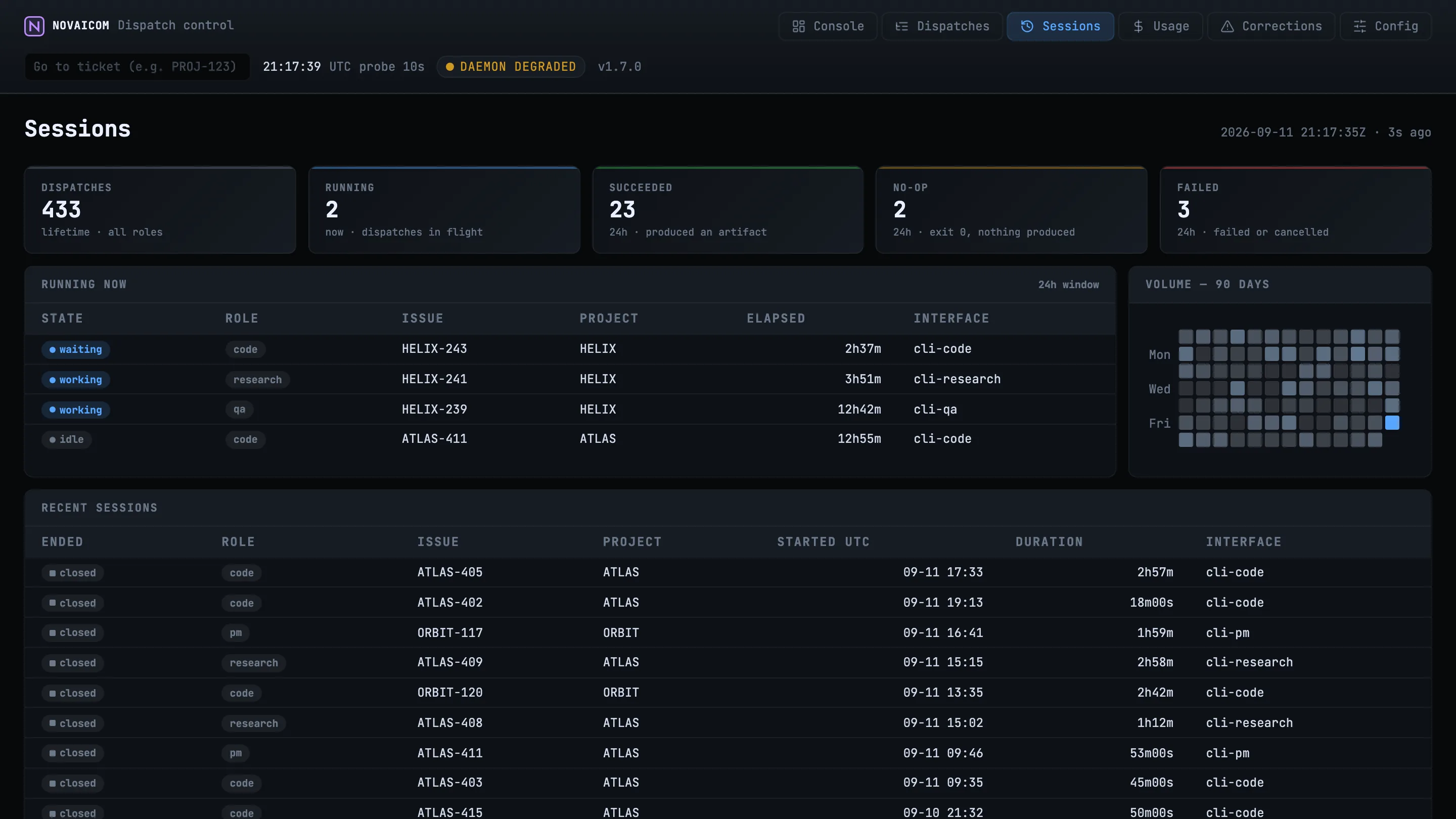
NAICOM sits between your engineers and the models they work with, and writes down what happened. Every session opens against a tracked issue. Every instruction is a versioned prompt file committed beside the code it produced. Every commit carries the session ID, the issue key, and the human who approved the merge — so "which of these changes was AI-written, on whose authority, and under what instruction?" is a query, not an investigation. It runs against the forge you already use — GitHub, GitLab, Bitbucket or Gitea, resolved per repository — so nothing about the existing workflow has to move.

Issue-linked sessions

No AI session starts without a ticket. The business requirement that justified the change is the root of the trace, not a reconstruction after the fact.

Versioned prompt files

The instruction lives in the repository next to its output, under review and under diff. What the model was asked to do is a permanent artifact, not chat scrollback.

Human approval on the record

AI opens the pull request; a named person merges it. The approver, the timestamp, and the reviewed diff are captured as the oversight evidence auditors ask for.

Queryable, exportable trail

Ask for every AI-driven change to a component over a quarter and get a table: issue, prompt file, session, commit SHA, approver. That table is the auditor deliverable.

naicom / sessions NCC-441
naic-f804 · code
prompt: NCC-441-patch.md
● coding
naic-a219 · qa
review · commit 3b9d017
✓ closed
naic-7c3e · code
closed by receipt · signed
✓ closed
operator: alice@customer.gov 3 receipts · signed

Built on federal compliance work

We learned auditability the hard way first.

Before NAICOM there was FedRAMP: KSI emission at the cadence 20x demands, machine-readable authorization packages under the Consolidated Rules, and host-state evidence a 3PAO will sign off on. That tooling is live and still shipping. It is also the reason the AI audit trail is built the way it is — a team that has handed evidence to a federal assessor builds a different kind of log.

beacon / ksi-stream · 20x-moderate CONTINUOUS
61/61
KSIs PASSING
17m
SINCE EMIT
3d
CADENCE FLOOR
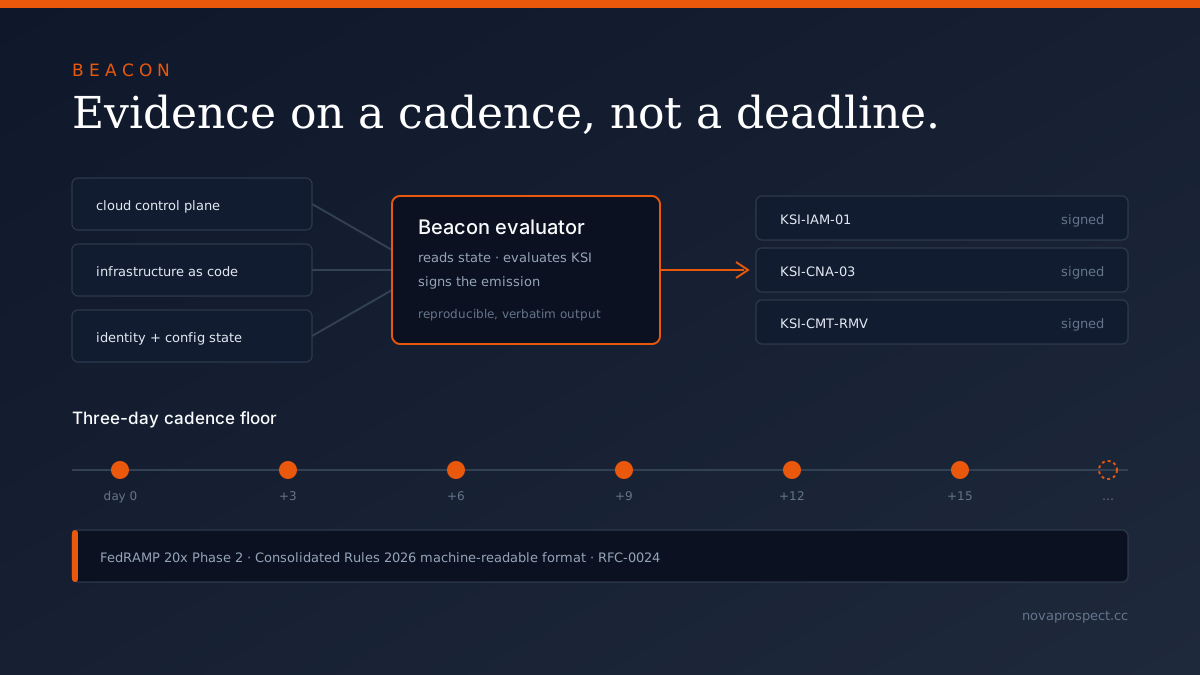
KSI-IAM-01 · phishing-resistant MFA ✓ pass
KSI-CNA-RNT · network segmentation ✓ pass
KSI-CMT-RMV · immutable infra ✓ pass
signed at source · ed25519 · package ready

Beacon

Beta · Design Partners

FedRAMP 20x Key Security Indicator emitter. Reads infrastructure state continuously and emits signed, machine-readable KSI evidence — at the three-day cadence 20x asks for and in the format the Consolidated Rules 2026 mandate. Plugs into the Engine or stands alone.

Learn more →
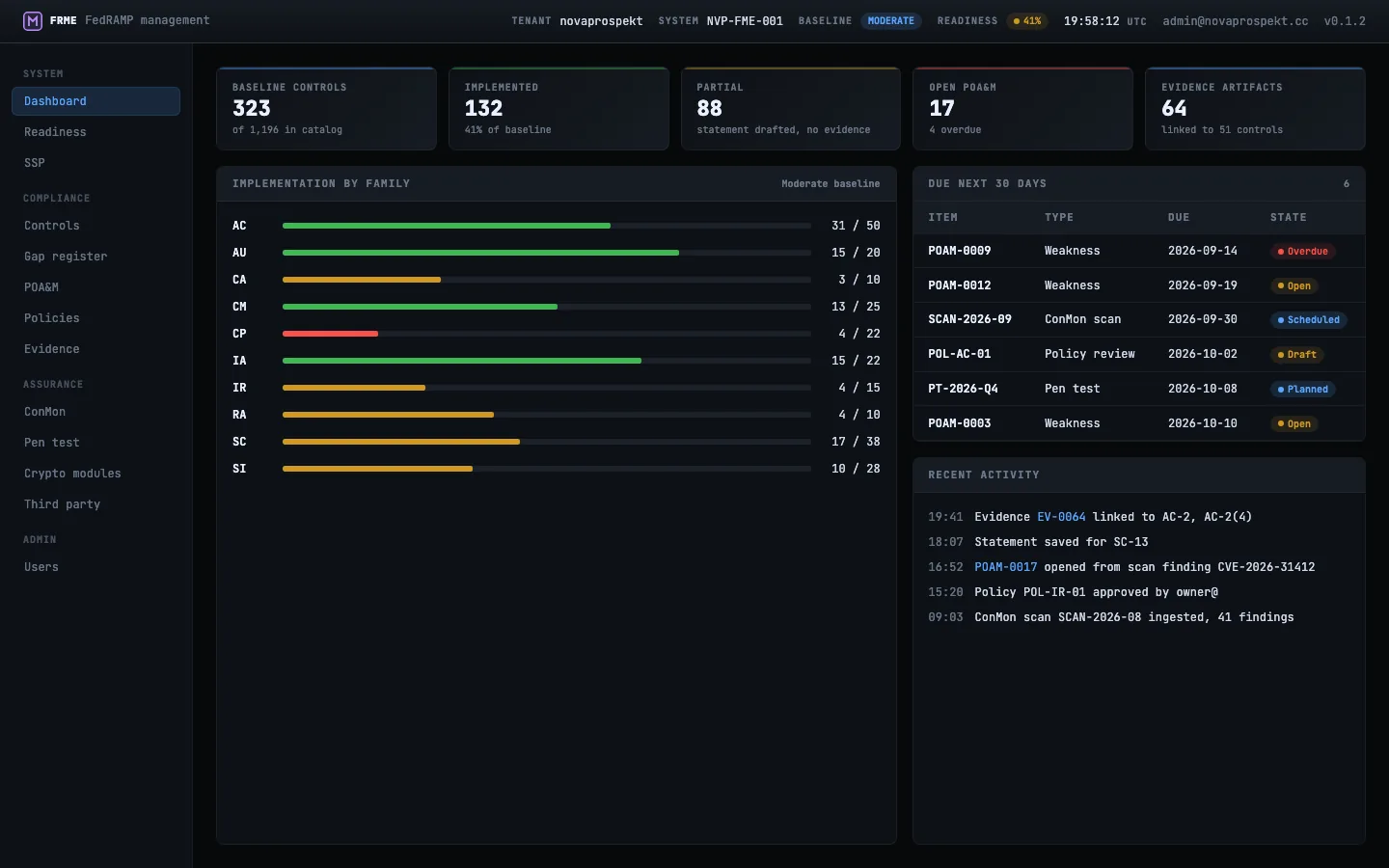
engine / CloudOps-SaaS-v2 ATO IN PROGRESS
287/325
CONTROLS
12
POA&Ms
47
DAYS TO ATO
IMPLEMENTED 88.3%
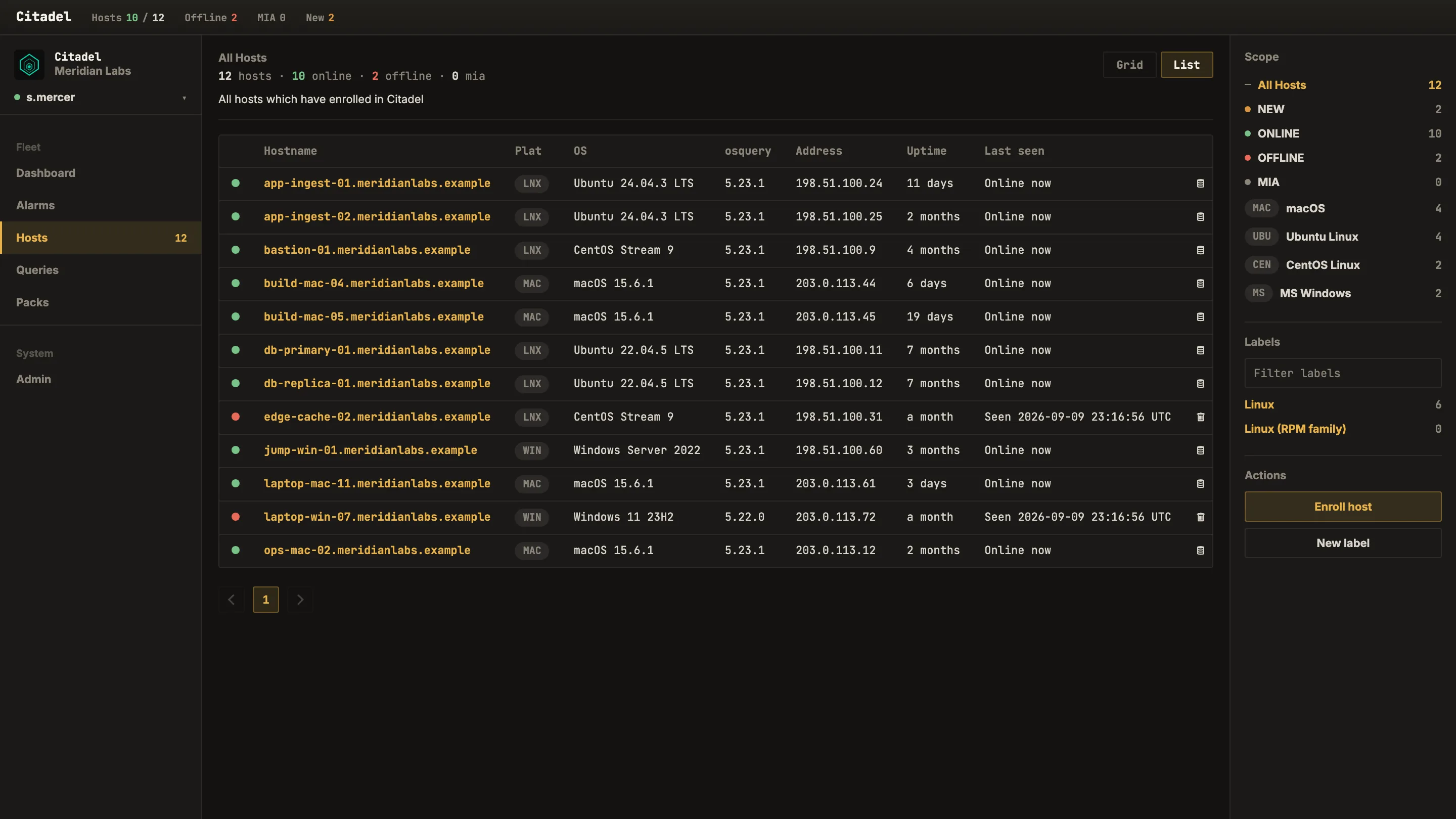
CM-8 · component inventory ✓ 247 hosts
SA-11 · dev testing ✓ 3 refs
SI-2 · flaw remediation ● 1 open

System of record for authorization, in both directions. Holds Beacon's 20x KSI emissions as the authoritative package, and generates Rev 5 OSCAL artifacts and POA&M lifecycle for organizations on the traditional path through the Consolidated Rules transition window.

Learn more →

The platform

Four products. One authorization boundary. One audit surface.

Run independently, each product stands on its own. Run together, they compose into a single evidence pipeline — from the edge request that authorizes access, through the AI-assisted change that ships the code, to the KSI emission that lands in the 20x authorization package and the OSCAL artifact your 3PAO reads.

engine / evidence-ledger · live
TimeSourceEventControlArtifact
09:14:08BeaconKSI-IAM-01 · phishing-resistant MFA · passIA-2(1), IA-2(11)20x-pkg §iam-01
09:14:22Citadelpack cm8-inventory · 247 hosts · rows 101,924CM-8, CM-8(1)ssp.json §cm-8
09:14:48NAICOMsession naic-f804 · role=code · NCC-441SA-11, SI-7ssp.json §sa-11
09:16:03NAICOMcommit 3b9d017 · prompt NCC-441-patch.mdCM-3, CM-5ssp.json §cm-3
09:16:21Enginecontrol refresh · AC-2 · drift=0AC-2ssp.json §ac-2
09:17:05EnginePOA&M PM-2026-0147 · verified closedSI-2poam.json §147
6 events · 4 sources · signed · 20x-package + OSCAL-linked · forwarded to splunk-prod

One evidence pipeline

Every event inside the boundary — access, AI work, control change — lands in the same OSCAL record. Auditors see one surface, not three.

Control coverage by design

AC, SC, AU, CM, SA, SI, and AI-RMF families are covered natively by the stack. No manual attestation pass.

Signed, tamper-evident

Every event is signed at its source. The evidence ledger is verifiable end-to-end without trusting Novaprospect.

Deploys in your boundary

The entire stack runs inside your authorization boundary. Customer data, policy, sessions, and audit records never leave your environment.

Compliance

Frameworks, answered with artifacts.

"Aligned to" is not a control. Each framework below is matched to the specific record the platform produces against it, and to what an assessor is handed when they ask.

NIST AI RMF 1.0

Coverage across all four functions. GOVERN: role-scoped dispatch and a required human merge separates who instructs from who approves. MAP 4.1: the prompt file is the documented AI input, versioned with the code. MEASURE 2.8: session records make every AI-driven action traceable to its instruction. MANAGE: the ledger is what an incident review reads. The auditor is handed a per-issue export — ticket, prompt file, session log, commit SHA, approver.

ISO/IEC 42001

Evidence for the AI management system where AI touches the SDLC. Clause 6.1.2 risk assessment scoped per dispatch rather than per organization; Clause 8.1 operational control enforced by role separation at spawn time; Annex A.6.2 life-cycle records generated automatically. Your Statement of Applicability cites artifacts, not narrative.

EU AI Act

Article 12 record-keeping and Article 14 human oversight, produced as a by-product of shipping. Logs are generated automatically over the system life cycle and every change carries a documented human approval — which is what Article 14 asks for and what a policy document alone cannot demonstrate. High-risk and Article 26 deployer obligations apply from August 2, 2026.

Federal authorization — the work behind it

FedRAMP 20x

Native KSI emission against the Phase 2 Moderate baseline. Designed for the Q3-Q4 2026 wide-adoption window when 20x becomes the default authorization pathway.

Consolidated Rules 2026

Generates the machine-readable authorization package mandated by RFC-0024, effective September 30, 2026. No template files.

NIST 800-53 Rev 5

Full control-family coverage tracked against the Rev 5 baseline for organizations on the traditional path. POA&M and OSCAL artifacts built in.

DoD IL2 / IL4 / IL5

Architecture aligned to the DoD Cloud Computing SRG. IL2 authorization is the near-term target with IL4 / IL5 defined on the roadmap.

About

About Novaprospect

Novaprospect, LLC is a New Mexico limited liability company. The company builds authorization, governance, and access-control software for organizations operating in regulated environments.

The product stack is purpose-built for compliance workloads. Every component is designed for reliability, auditability, and a clear path to FedRAMP and DoD IL authorization.

Contact

Get in touch about early access, partnerships, or general inquiries.